
No U.S. state licenses boot camp instructors. Here’s how to become a boot camp instructor: earn an NCCA-accredited personal trainer or group fitness certification, add a boot camp specialty, and practice coaching groups. Eligibility varies by credential, but many primary certifications require you to be at least 18, have a high school diploma or equivalent, and hold current CPR/AED. Check yours first.
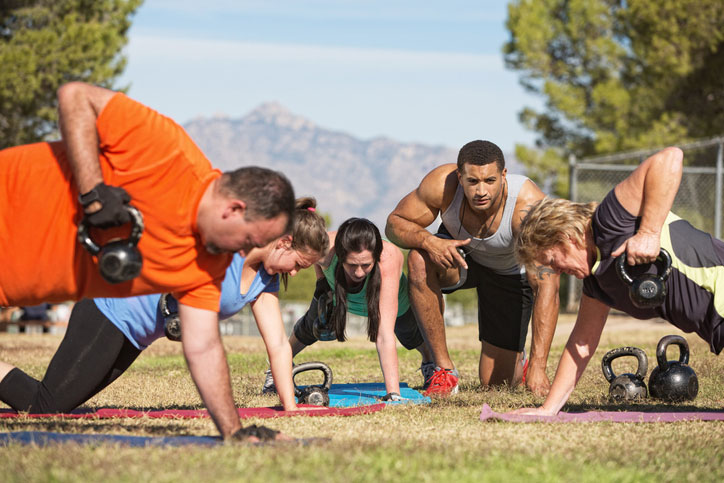
Boot camp training is one of the specialties you can add as a trainer, and it changes the job more than most. You’re coaching a whole group at once, so you program for mixed fitness levels, watch form across the room, and manage the pace through the session.
This guide covers what a boot camp involves, the formats trainers run, how to plan one, and the certifications that prepare you to lead it.
What Is Boot Camp Training?

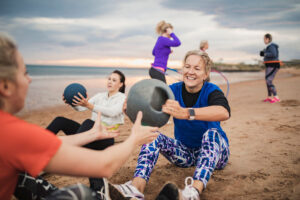
Boot camp training is a group workout that mixes cardio, strength, and bodyweight exercises at a fast pace with short rests. The name comes from military basic training, and many classes borrow its structure: drills, stations, and partner or team challenges. Many run outdoors, and plenty run in a gym or studio.
There’s no single boot camp format. Each one reflects the trainer who designs it. You’ll also see them sold as adventure boot camps, fitness camps, or lifestyle camps, often as a set session that runs for several weeks.
Here’s a suggested session structure you can adapt:
- Warm-up: Dynamic stretching and mobility work to get the group moving.
- Cardio: Sprints, running intervals, hill work, or obstacle courses.
- Strength: Bodyweight moves or equipment like resistance bands, dumbbells, and kettlebells.
- Cool-down: Lower-intensity movement and stretching to close the session.
Common boot camp exercises include sprints, squats, lunges, jumping jacks, squat thrusts, and planks. Choose movements you can cue clearly and check across the whole group.
Types of Boot Camps You Can Run
Many trainers build a boot camp around one group of clients and name it after them. Examples of boot camp formats include the ones below.
General Fitness Boot Camps
This is the broadest format: cardio, strength, and endurance work that progresses over the weeks. Adapt exercise selection, intensity, duration, recovery, and progression to each participant’s health and fitness, and have an easier and a harder version of each exercise ready.
Sports-Specific Boot Camps
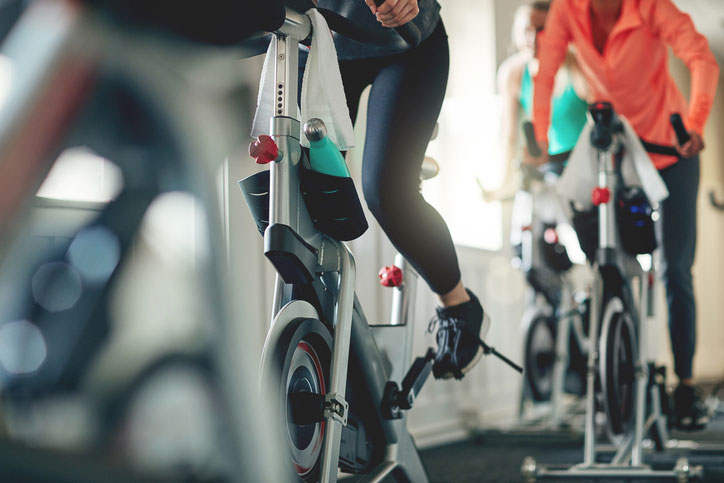
These train for a sport’s demands, and the programming is up to you. For example, a running boot camp might lean on cardio intervals, lower-body strength, and running technique. A cycling boot camp might pair indoor cycling with strength and mobility work. A ski conditioning camp might build leg strength, core stability, and mobility before the season starts.
Women-Only Boot Camps
Some trainers who focus on women’s fitness run women-only groups for clients who prefer that setting.
Weight Loss Boot Camps
These pair group training with habit coaching and regular check-ins. Set honest expectations from day one. Keep nutrition coaching within your qualifications, your certification’s scope of practice, and any state rules that apply. Refer medical nutrition therapy and therapeutic diets to a registered dietitian or another qualified healthcare professional.
Pre-Wedding Boot Camps
These are short programs for people getting ready for a wedding, often booked as a group by the wedding party. The fixed date gives the program a clear end point.
Boot Camps for Older Adults
The U.S. Census Bureau reports that by 2030, all baby boomers will be age 65 or older. Boot camps for older adults use individualized strength, balance, and mobility work, with impact and intensity adapted to each person. Screen every participant before they start, the same way you would for any group.
Kids’ and Teen Boot Camps
Games, relays, and short challenges keep kids moving. Keep the intensity age-appropriate, provide qualified supervision, and pay close attention to movement skill. Check the rules of any school, camp, or facility you work with.
How to Plan and Lead a Boot Camp
Running your own boot camp means you decide the format, the schedule, and the price. It also means you have to scale a workout that works for one client so it works for a whole group.
Your program will depend on four things:
- The focus of the camp and who it’s for
- The goals clients want to reach by the end
- The space and equipment you have
- The age and current fitness of the people signing up
Screen participants before the first session using an established preparticipation screening process. Whether medical clearance is advised depends on a person’s symptoms, known disease, current activity level, and the planned exercise intensity.
Then run a fitness assessment and repeat it at the end. Clients see their own progress, and you get numbers to show the next group. Keep the exercise menu short enough to coach well, and have an easier and a harder version of every move ready.
Once you have two or more clients, partner and team drills are one way to add variety.
Coach Like a Trainer, Not a Drill Sergeant

The name suggests yelling, but you don’t have to coach that way. Clear cues, quick form corrections, and specific encouragement do the work. Your job is the same in every format: motivate the group and keep everyone safe while they push.
Where Boot Camp Instructors Find Clients
You can run a boot camp through an employer or on your own. Common settings include:
- Gyms and fitness centers
- Community centers and senior centers
- Company wellness programs
- Schools and colleges
- Parks and other outdoor spaces you book or rent
Independent trainers often market on social media and through local groups, and some travel to clients’ workplaces. If you plan to train in a public park or start your own business, check your local rules first.
Group pricing can work for both sides. You can price group sessions below your private rate and still coach several people in the same hour.
What Boot Camp Instructors Earn
The Bureau of Labor Statistics doesn’t track boot camp instructors separately. It counts them with all fitness trainers and instructors. Nationally, that group earned a median annual wage of $47,160 ($22.67 an hour) as of May 2025, according to the BLS.
BLS annual wage figures assume a standard work year of 2,080 hours, and they don’t cover self-employed trainers. Many fitness trainers and instructors work variable or part-time schedules, so actual yearly earnings depend on the hours worked.
The BLS projects employment of fitness trainers and instructors to grow 7% from 2025 to 2035, much faster than the average for all occupations. It expects about 68,000 openings a year. Many of those openings come from the need to replace workers who move to other occupations or leave the labor force, for example to retire.
Benefits of Boot Camp Training for Clients
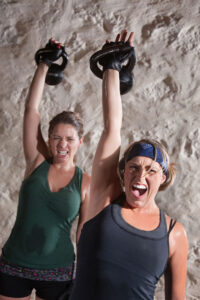
A well-run boot camp can combine cardio, strength, and mobility work in one session, often with little equipment. Group classes offer peer interaction and encouragement, and both group and individual formats can work. Pick the format that suits your participants. A group format gives you:
- Peer interaction and encouragement during each session
- A team setting that suits company and club groups
- Room to price group sessions below your private rate

Results depend on consistency, sleep, and nutrition, not only on the hours in class. Talk about that with clients at the start so their expectations match what a few weeks of training can do.
How to Become a Boot Camp Instructor

There’s no single required path. Here’s a recommended route:
- Check eligibility for your chosen credential. Eligibility varies by credential. Many primary certifications require you to be at least 18, have a high school diploma or equivalent, and hold current CPR/AED. Check the specific credential’s requirements first.
- Earn an NCCA-accredited certification. Start with a personal trainer certification (CPT) or a group fitness instructor certification. Check prospective employers’ credential requirements before you choose a program.
- Add a boot camp or group training specialty. These shorter courses focus on programming and cueing for groups.
- Practice coaching groups. Assist with classes, coach a small group of friends, or start with a free trial session before you charge.
- Keep your certification current. Many primary certifications renew on a set cycle with continuing education credits and current CPR/AED. Check your certifier’s rules, because some credentials, such as the NESTA Group Exercise Instructor certification, don’t expire.
Advanced and specialty credentials can have their own prerequisites, so read each one’s requirements before you pay.
Do You Need a Degree?
Usually not to get started. According to the BLS, fitness trainers and instructors typically need a high school diploma to enter the occupation, though some employers prefer an associate’s or bachelor’s degree. Employers usually prefer certification, but requirements vary by facility. A degree can help if you want a deeper science background or a path into management or college athletics. Relevant programs include exercise science, kinesiology, and exercise physiology.
Depending on the program, coursework may include:
- Nutrition and health: The basics you need to support clients’ habits outside class.
- First aid and CPR: Emergency response basics for a training setting.
- Chronic disease and obesity: The CDC reports that 40.3% of U.S. adults age 20 and older had obesity, based on body mass index, during August 2021 to August 2023. Knowing the related health conditions helps you screen participants and set starting levels.
- Biomechanics: The movement knowledge that lets you spot and fix form problems across a group.
- Strength and conditioning: The training principles behind how you progress a group from week one to the final session.
Master’s Degrees in Exercise Science
Some master’s programs take one to two years, depending on the school, your enrollment pattern, and the degree requirements. You don’t need one to run boot camps. It can matter if you want to teach or work with athletes. Clinical roles may require specific degree content, clinical experience, and additional credentials. Pair any degree with a certification, and check what your target employers ask for, because requirements vary by facility.
Boot Camp Certification: Which Credentials Count
Personal training is a self-regulated field. Accreditation shows a certification program met an independent quality standard. It isn’t a measure of popularity, and it doesn’t endorse everything a provider sells.
NCCA Accreditation
The National Commission for Certifying Agencies (NCCA) accredits specific certification programs, not whole companies or their prep courses. It reviews each program against its published standards, which set requirements for how a certification program is developed, governed, and run. The NCCA also keeps an online directory of accredited certification programs.
You may also see the Distance Education Accrediting Commission (DEAC) mentioned. DEAC accredits institutions that primarily offer distance education. It isn’t a substitute for NCCA accreditation of a certification program.
Primary Certifications to Start With
These personal trainer certifications are described as NCCA-accredited on their certifying organizations’ own sites:
- ACSM Certified Personal Trainer (ACSM-CPT), from the American College of Sports Medicine
- ACE Certified Personal Trainer, from the American Council on Exercise
- NASM Certified Personal Trainer (NASM-CPT), from the National Academy of Sports Medicine
- NCCPT Certified Personal Trainer, from the National Council for Certified Personal Trainers
- NESTA Personal Fitness Trainer (PFT), from the National Exercise and Sports Trainers Association
- NFPT Certified Personal Trainer, from the National Federation of Professional Trainers
- NSCA Certified Personal Trainer (NSCA-CPT), from the National Strength and Conditioning Association
If you’d rather lead groups than train one-on-one, ACE offers two group fitness exam options. The proctored ACE Group Fitness Instructor Certification is NCCA-accredited, according to ACE. Its open-book, non-proctored Group Fitness Instruction Certificate is not accredited.
The ACSM Certified Group Exercise Instructor (ACSM-GEI) is another group option. ACSM lists four requirements: be 18 or older, hold a high school diploma or the equivalent, hold adult CPR/AED certification, and, starting in 2027, hold first aid certification. That page makes no NCCA accreditation claim, so check the credential’s status before you count on it.
Boot Camp and Group Training Specialty Credentials
A specialty course doesn’t replace a primary certification. It adds group programming and coaching skills on top of one. These are current as of November 2026:
| Credential | Exam and Requirements | Accreditation and CEUs |
|---|---|---|
| NASM Group Personal Training Specialization (GPTS) | Online exam, 100 questions in 90 minutes, 70% to pass. No prerequisites, but NASM recommends a personal trainer certification. | A specialization, not an NCCA-accredited certification. Earns 1.9 NASM CEUs. |
| FiTOUR Primary Boot Camp Fitness Certification | Home-study course and exam designed for group fitness instructors and personal trainers. An Advanced level is also offered. | Not presented by FiTOUR as NCCA-accredited. Approved for 0.8 NASM CECs or 0.8 ACE CECs when you register for the matching continuing education option. |
| American Sports & Fitness Association (ASFA) Group Fitness & Bootcamp Instructor Certification | Online exam. No prior ASFA personal trainer certification required. | ASFA reports ICOES accreditation, which is separate from NCCA accreditation of certification programs. |
| NESTA Group Exercise Instructor Certification | Online exam, 100 questions, 70% to pass. No prerequisites. | A group exercise credential, not boot camp specific. NESTA does not list it as NCCA-accredited, and says the certificate doesn’t expire. |
Before you pay for any course, check prospective employers’ credential requirements, because they vary by facility.
Frequently Asked Questions
Do you need a certification to run a boot camp?
No state licenses personal trainers or boot camp instructors. According to the BLS, employers usually prefer to hire certified trainers, but requirements vary by facility. Check prospective employers’ credential requirements before you choose a program.
What is the best boot camp certification?
Start with a primary certification, such as an NCCA-accredited personal trainer certification or the proctored ACE Group Fitness Instructor Certification. Then add a boot camp or group training specialty if you want structured programming for groups. The specialty courses from NASM, FiTOUR, ASFA, and NESTA covered on this page aren’t presented by their providers as NCCA-accredited, so treat them as add-ons, not your main credential.
How long does it take to become a boot camp instructor?
It depends on your study pace. Most primary certifications are self-paced, and specialty courses are shorter. NASM, for example, gives you one year from purchase to pass its group training specialization exam. Check each program’s own estimate before you plan around a date.
Can you run a boot camp in a public park?
Many trainers do, but the rules depend on where you are. Check your local rules before you start charging for sessions in a public space.
How much do boot camp instructors make?
The BLS doesn’t report boot camp pay separately. Fitness trainers and instructors as a whole earned a median of $47,160 a year as of May 2025. Many work variable or part-time schedules, so actual yearly earnings depend on the hours worked.
- No state license: No U.S. state licenses boot camp instructors, so your certification is your credential.
- Start with an accredited credential: Choose an NCCA-accredited personal trainer or group fitness certification, and check prospective employers’ credential requirements before you choose a program.
- Add a specialty: Boot camp and group training courses from NASM, FiTOUR, ASFA, and NESTA add group coaching skills, but their providers don’t present them as NCCA-accredited.
- Degree optional: The BLS says trainers typically need a high school diploma to start, though some employers prefer an associate’s or bachelor’s degree.
- Pay: Fitness trainers and instructors earned a median of $47,160 as of May 2025, and the BLS projects 7% job growth from 2025 to 2035.
2025 US Bureau of Labor Statistics salary figures for Exercise Trainers and Group Fitness Instructors. Figures reflect national data, not school-specific information. Conditions in your area may vary. Data accessed November 2026. National job outlook figures (2025 to 2035) are from the BLS Occupational Outlook Handbook.
Boot camp work starts with a primary certification, and programs that prepare you for one differ in which exam they cover, what they cost, how long they take, and whether you study online or in a classroom. Compare a few near you before you commit to one.